

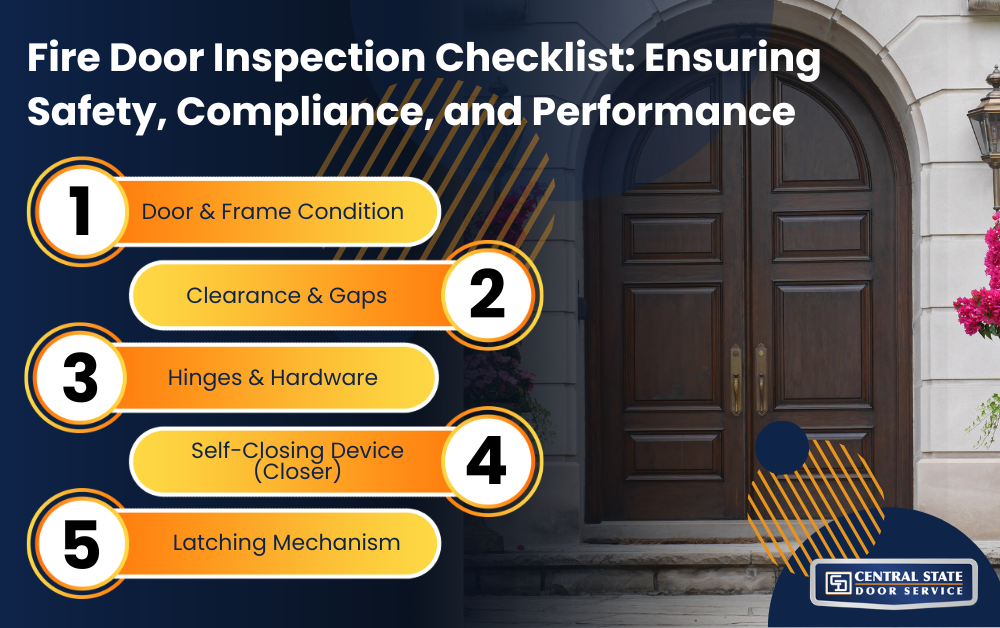
Fire safety in commercial and industrial buildings depends heavily on the reliability of each fire door. Companies like CS Doors understand that proper inspection and maintenance are essential to ensuring these critical systems perform as intended during an emergency. A fire door is not just a barrier; it is a life-saving component developed to help stop the spread of fire and smoke while ensuring safe passage out of the building . Without regular inspections, even a properly installed door can fail when it matters most. Building owners, facility managers, and contractors must stay proactive in evaluating every component of a fire door system. This guide outlines a comprehensive inspection checklist to help maintain safety and compliance.
Door & Frame Condition
Structural Integrity of the Door Assembly
A fire door must be free from visible damage to maintain its protective capabilities. Cracks, holes, or warping can significantly reduce the door’s ability to resist fire and smoke infiltration. Even minor surface damage can indicate deeper structural issues that compromise performance. Inspectors should carefully evaluate both the door and frame to ensure they remain solid and intact. Maintaining structural integrity is the foundation of fire door safety.
- Look for cracks, dents, or warping
- Check for holes or surface damage
- Ensure frame stability and alignment
Unauthorized Modifications and Alterations
Unapproved modifications are a common issue that can invalidate a fire door’s rating. Field-cut holes, added hardware, or alterations not performed according to manufacturer specifications can weaken the door. These changes may seem minor, but they can drastically affect fire resistance. Every fire door must match its original tested configuration to remain compliant. Inspectors should verify that no unauthorized adjustments have been made over time. If modifications are found, corrective action is necessary to restore compliance.
- Identify field modifications or drilled holes
- Verify hardware matches original specifications
- Remove or correct unauthorized changes
Fire Label Visibility and Legibility
Fire-rated doors are required to have a clearly visible and legible label. Aclear and visible label provides essential information about the door’s fire rating and certification. Over time, labels may become painted over, scratched, or removed entirely. Without this identification, it becomes difficult to verify compliance with safety standards. Inspectors must ensure that the label is present and readable during every evaluation. Preserving this information is essential for both safety and regulatory purposes.
- Confirm the label is present
- Ensure text is readable and not painted over
- Verify certification markings remain intact
Clearance & Gaps
Proper Gap Measurements Around the Door
The gaps around a fire door play a crucial role in preventing the spread of smoke and flames. Standard requirements typically allow for small, controlled clearances along the sides and top of the door. If these gaps exceed acceptable limits, the door’s effectiveness is compromised. Inspectors should measure these spaces carefully to ensure compliance with established guidelines. Even slight deviations can impact performance during a fire event. Maintaining proper clearances is essential for containment.
- Side and top gaps typically 1/8″–3/16″
- Measure consistently across the frame
- Address any irregular spacing
Bottom Clearance Requirements
The space at the bottom of a fire door must also meet specific limitations. Excessive clearance can allow smoke and heat to pass through, reducing the door’s protective function. While some space is necessary for operation, it must remain within acceptable standards. Inspectors should verify that the bottom gap does not exceed recommended measurements. Any inconsistencies should be corrected promptly to maintain safety. Proper bottom clearance ensures the door performs as designed.
- Bottom gap typically ≤ 3/4″
- Check for uneven flooring impact
- Adjust if clearance exceeds limits
Preventing Smoke and Fire Penetration
One of the primary purposes of a fire door is to act as a barrier against smoke and flames. Excessive spacing around the door can undermine this function entirely. Even small openings can allow dangerous gases to spread quickly throughout a building. Inspectors must ensure that all gaps are controlled and within code requirements. Handling these issues helps maintain the integrity of fire compartments. This level of attention is critical for occupant safety.
- Inspect for visible light through gaps
- Seal areas that allow air leakage
- Maintain tight, consistent spacing
Hinges & Hardware
Condition and Alignment of Hinges
Hinges are fundamental to the proper operation of a fire door. They must be secure, properly aligned, and free from damage to support consistent movement. Misaligned or worn hinges can cause the door to stick or fail to close correctly. Inspectors should examine each hinge for signs of wear or looseness. Ensuring proper alignment helps maintain smooth operation. Reliable hinges are essential for long-term performance.
- Check hinge alignment and spacing
- Look for wear or corrosion
- Ensure hinges are firmly attached
Fasteners and Screw Integrity
All hardware components must be firmly secured with the correct fasteners. Missing or loose screws can weaken the entire door assembly. Over time, vibration and frequent use may cause hardware to loosen. Inspectors should check that every screw is present and properly tightened. This simple step can prevent larger mechanical failures. Maintaining secure connections is vital for safety.
- Confirm all screws are present
- Tighten loose fasteners
- Replace damaged or stripped screws
Compatibility of Hardware Components
Fire door hardware must be compatible with the door’s design and rating. Using incorrect or mismatched components can compromise performance. Each piece of hardware should meet the manufacturer’s specifications and fire rating requirements. Inspectors must verify that all installed components are appropriate for the door. Any discrepancies should be corrected to maintain compliance. Proper hardware selection ensures reliable operation.
- Verify hardware matches fire rating
- Check for incompatible replacements
- Ensure proper installation of components
Self-Closing Device (Closer)
Proper Installation of Door Closers
A fire door must be equipped with a properly installed self-closing device. This component ensures that the door automatically returns to a closed position after being opened. Improper installation can prevent the closer from functioning effectively. Inspectors should confirm that the device is mounted correctly and securely. A well-installed closer is critical for emergency performance. Without it, the door cannot fulfill its intended purpose.
- Confirm the correct mounting position
- Check for secure attachment
- Ensure no visible damage
Full Closure from Any Position
A properly functioning fire door should close completely from any open position. This includes partial openings as well as fully open states. If the door fails to close on its own, it cannot provide adequate protection. Inspectors should test the door multiple times to ensure consistent performance. Reliable closure is a key requirement for compliance. This function must be dependable in all conditions.
- Test from partially open positions
- Test from fully open positions
- Confirm consistent closing behavior
Controlled Closing Speed
The speed at which a fire door closes is just as important as its ability to close. A door that slams shut can cause damage, while one that closes too slowly may not latch properly. The closer must be adjusted to provide smooth, controlled movement. Inspectors should evaluate the closing speed during testing. Proper adjustment ensures both safety and durability. Balanced operation is essential for long-term reliability.
- Check for slamming or sticking
- Adjust speed as needed
- Ensure smooth, controlled motion
Latching Mechanism
Secure Engagement of the Latch
A fire door must fully latch to create an effective seal against fire and smoke. The latch bolt should engage securely with the strike plate every time the door closes. If the door fails to latch, it cannot perform its protective function. Inspectors should verify proper engagement during each test. Consistent latching is a critical safety requirement. This step ensures the door remains closed under pressure.
- Confirm latch engages fully
- Listen for a secure click
- Check for partial latching issues
Alignment of Latch and Strike Plate
Proper alignment between the latch bolt and strike plate is necessary for smooth operation. Misalignment can prevent the door from latching completely. Over time, building movement or wear may affect this alignment. Inspectors should check for any signs of misalignment and address them promptly. Correct positioning ensures reliable functionality. This detail plays a significant role in overall performance.
- Inspect strike plate positioning
- Adjust alignment if needed
- Ensure smooth engagement
Hands-Free Latching Operation
A fire door should latch automatically without manual assistance. If someone must push or pull the door to secure it, there is an issue that needs attention. Inspectors should test the door to confirm that it latches independently. This requirement is essential for emergency situations where quick action is needed. Reliable automatic latching supports occupant safety. It also ensures compliance with fire safety standards.
- Test hands-free closure
- Identify resistance issues
- Ensure automatic latching
Seals & Gasketing
Condition of Intumescent Seals
Intumescent seals expand when exposed to fire or high heat conditions , sealing gaps around the door. These seals must remain intact and free from damage to function properly. Painted-over or deteriorated seals may not activate as intended. Inspectors should carefully examine their condition during each inspection. Maintaining these seals is crucial for fire resistance. Their performance directly impacts safety.
- Check for damage or wear
- Ensure seals are not painted over
- Verify proper placement
Smoke Seal Continuity
Smoke seals are engineered to prevent the movement of hazardous gases during a fire. They must be continuous and undamaged to provide effective protection. Any breaks or gaps in the seal can allow smoke to pass through. Inspectors should ensure that these seals are properly installed and maintained. Consistency is key to their effectiveness. Proper sealing supports safe evacuation.
- Inspect for continuous sealing
- Look for gaps or breaks
- Replace damaged sections
Absence of Gaps or Missing Sections
Missing or incomplete gasketing can compromise the entire fire door system. Even small gaps can reduce the door’s ability to contain fire and smoke. Inspectors must verify that all sealing components are present and properly positioned. Addressing these issues promptly is essential for maintaining safety. Complete coverage ensures optimal performance. Attention to detail makes a significant difference.
- Ensure full perimeter coverage
- Replace missing sections
- Maintain tight seals
Hold-Open Devices
Functionality of Electromagnetic Releases
Electromagnetic hold-open devices are commonly used to keep fire doors open during normal operations. These devices must release automatically when triggered by a fire alarm. Inspectors should test their functionality to ensure proper response. A failure to release can prevent the door from closing during an emergency. Reliable operation is critical for safety. Proper testing helps identify potential issues.
- Test release during alarm simulation
- Verify power disconnect response
- Ensure proper re-engagement
Automatic Closure Upon Alarm Activation
When a fire alarm is activated, the fire door must close without delay. This automatic response is essential for containing fire and smoke. The system should be tested to confirm the door closes completely when triggered. Any delay or malfunction should be addressed immediately. Consistent performance is necessary for compliance. This feature plays a vital role in emergency response.
- Confirm immediate closure
- Check the full latch after release
- Ensure no delays occur
Elimination of Unauthorized Hold-Open Methods
Using wedges or other unauthorized methods to hold a fire door open is a serious safety violation. These practices prevent the door from closing when needed. Inspectors must ensure that no such methods are in use. Educating building occupants about proper usage is also important. Maintaining compliance requires vigilance and awareness. Eliminating these risks helps protect lives.
- Look for wedges or door props
- Remove unauthorized devices
- Educate staff on proper use
Conclusion
A properly maintained fire door is a critical component of any building’s fire protection strategy. Regular inspections ensure that every element, from hinges to seals, functions as intended under emergency conditions. By following a detailed checklist, facility managers can identify issues early and maintain compliance with safety standards. Companies like CS Doors emphasize the importance of consistent inspection and professional maintenance to keep fire doors operating at peak performance. Ignoring these responsibilities can lead to serious safety risks and regulatory consequences. Stay proactive and make fire door inspections a priority to safeguard both property and lives.
If you need expert guidance or professional fire door solutions, contact CS Doors today to ensure your building remains safe, compliant, and fully protected.


